Muslims in Rail submitted its formal response to the Department for Transport’s recent ‘Call for Views and Ideas’ related to present and future needs of Transport Labour Market and Skills. You can read our full response HERE.
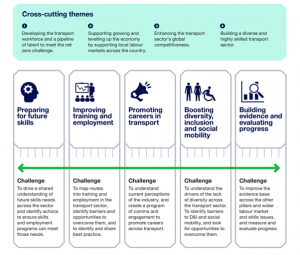
This important government consultation proposes four cross-cutting themes and five proposed ‘pillars’ that the DfT and industry will work together in tackling, including the creation of a new industry-led Taskforce – Transport Employment and Skills Taskforce (TEST). Read the DfT guidance document HERE
Our 16-page response covers insights into some of the problems within the industry and potential solutions that should be considered by key stakeholders to improve diversity, inclusion and social mobility for Muslims and BAME people in the industry. Some of our recommendations are summarised below:
- A review and overhaul of inherent bias and disadvantage in the recruitment selection processes within the transport sector
- Better outreach engagement with the youth in educational establishments and local community centres, such as Mosques, Islamic cultural centres and Muslim schools
- Setup of a task force to create diverse role models and mentors; to be a leadership priority and D&I deliverable throughout the transport sector
- Transport executives have performance linked-objectives to proactively address the disproportionate lack of BAME representation and create reverse mentoring opportunities for young people
- Additional funding for career services allocated for local communities with high BAME density
- Ring fencing of all expired levy funds for apprenticeship schemes, to support future prospects of young people
- Shadow leadership teams made up of potential BAME and Muslim leaders selected into leadership roles to build candidate confidence
- Talent identification and acceleration programmes
- Mandatory unconscious bias training for all line management
- Re-evaluation the recruitment and selection processes in organisations
- Introducing Blind (names, gender and ethnic background information withheld from) CVs and application forms
- Meaningful diverse selection and recruitment panels
- Further training in sustainability and renewable technology across all areas, to ensure collective participation in climate action
- An ethical charter of practice for transport professionals
MIR would like to thank all members who contributed towards this important work, jazakullah khairun!