

Pioneer Profile - Trudy Aarons
In a traditionally male dominated industry it is important to highlight the significant contribution of women in the railways. Women such as Trudy Aarons, one of Britain’s first black female Train drivers. Trudy was born in 1961 within the parish of St Michael just outside of Bridgeton in Barbados. On finishing her secondary education at the age of 16, Trudy came to the UK to join her mother who was already in south London, finding a job after college with NAAFI, working there for 3 years before leaving to have children.
When her children were old enough to enter primary school she began looking for employment and was informed by a friend that there were opportunities in the railways. In 1989 she joined British Rail as a train guard and was determined to progress in her role. Upon the introduction of Driver-Only Operated (DOO) trains, she had the foresight to see that the train guard role could become obsolete so she began training to become a Driver. On her second attempt Aarons passed and began operating services out of Waterloo.
Over the course of her prominent career she operated some of the commuter belts most well known trains including the Class 63s, 57s 444s and 450s. After 29 years in the railways working for British Rail, South West Trains and South Western Railways, Trudy took early retirement In 2018 due to ill-health. Her perseverance to succeed in her role has had a positive impact on the sector that is best described in her own words, “I think I was British Rail’s first black woman train driver, so I blazed a trail, in a way. Now there are more women driving trains, and more black faces, too.”
Pioneer Profile - Barrington Young
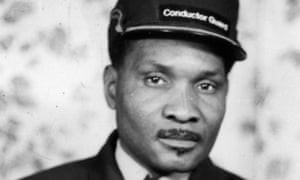
Young moved to the UK in 1954 from Jamaica after some encouragement from his older brother who was already working there. He found a job working at a cotton mill in Royton, Greater Manchester, only earning half the salary he earned back in Jamaica. But he kept searching and was rewarded when he found an opportunity in the railways.
Young began as a shunter but quickly moved on to goods guard and then senior conductor before becoming the first Black inspector in the north-west and one of the first inspectors in the UK.
Young’s experience as an inspector wasn’t always easy, even facing racial discrimination from other railway workers. A white train driver once described him as “scrapings of the barrel” but Young showed his professionalism, rising above and eventually winning over his colleagues.
He stayed in the railways for 39 years before retiring in 1994. Upon retirement he pursued his passion of educating, teaching young black children in his local community about their heritage. He remained a rail enthusiast as a member of the Manchester Model Railway Society even building a model train set of his own. He sadly passed away in 2017 but his influence as a pioneer continues to be felt.
Pioneer Profile - Wilston Samuel Jackson
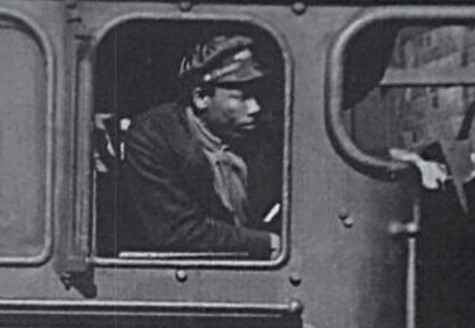
Britain's First Black Train Driver. Born in Jamaica in 1927, Wilston Samuel Jackson had ambitions of becoming a dentist as a boy. Unfortunately at the age of 17 his father passed away unexpectedly causing Jackson to alter his plans. He decided to move to the UK for better opportunities but was shocked by the outright racism he faced.
Undeterred, Jackson firmly set his sights on becoming a Train Driver. He first secured a fireman role as at the time there was an unofficial but well known whites-only recruitment policy for drivers. Many of Jackson’s fellow black railway workers did not believe a black man could become a driver but Jackson was an ambitious and hardworking man.
He built a reputation as a conscientious worker, never missing a single day or ever being late. And in 1962, his perseverance paid off when he passed his exams to become the UK’s first black train driver. He went on to drive some of the UK’s most iconic trains including the Mallard and the Flying Scotsman. He was commemorated with a plaque in the offices at Kings Cross Station a year before he passed away in 2018.

Pioneer Profile - Asquith Xavier
This Black History Month, we celebrate the achievement of Black people in Rail. The black community have played a vital role in the provision of public services in the UK since the first wave of migrants from the Caribbean. One member of the Windrush generation who had a significant impact on equality in employment legislation is Asquith Xavier.
Born in Dominica in 1920, Xavier moved to UK as an adult and like many who moved from former British colonies to the centre of the empire, he provided the labour to help rebuild the nation after WWII. Xavier initially worked for British Rail as a porter before being promoted into a rail guard role at Marylebone Station.
In 1966, Xavier applied for a position at Euston Station but his application was rejected due to the stations unofficial white-only recruitment policy. Unhappy with the decision Xavier campaigned to end the racially prejudiced policy and garnered support from a number of high profile people, including the then Secretary of State for Transport Barbra Castle. He was eventually successful and became the first non-white guard at Euston Station.
Xavier’s campaign led to additions to the Race Relations Act in 1968 which extended criminalisation of discrimination on the grounds of race or national origin in public places. His reluctance to accept personal injustice contributed to achieving equality in employment law and blazed a trail for future generations. In the year he would have celebrated his 100th birthday he was recognised by Network Rail with a mural at Chatham station.